
| 일 | 월 | 화 | 수 | 목 | 금 | 토 |
|---|---|---|---|---|---|---|
| 1 | 2 | 3 | 4 | 5 | 6 | 7 |
| 8 | 9 | 10 | 11 | 12 | 13 | 14 |
| 15 | 16 | 17 | 18 | 19 | 20 | 21 |
| 22 | 23 | 24 | 25 | 26 | 27 | 28 |
- passage retrieval
- GPT
- Data Viz
- AI 경진대회
- 데이터 시각화
- N21
- Bart
- Transformer
- pyTorch
- mrc
- 데이터 구축
- KLUE
- 딥러닝
- RNN
- nlp
- Self-attention
- matplotlib
- dataset
- AI Math
- Optimization
- 현대자동차
- ODQA
- N2N
- seaborn
- word2vec
- Bert
- Attention
- Ai
- 2023 현대차·기아 CTO AI 경진대회
- 기아
- Today
- Total
쉬엄쉬엄블로그
(NLP) Other Self-supervised Pre-training Models 본문
이 색깔은 주석이라 무시하셔도 됩니다.
Advanced Self-supervised Pre-training Models
GPT-2
GPT-2 : Language Models are Unsupervised Multi-task Learners
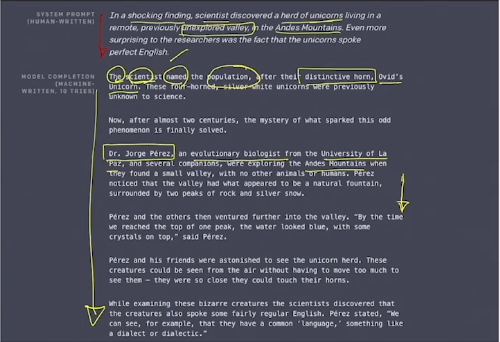
- 모델 구조는 GPT-1과 다르지 않음
- 트랜스포머 모델에 레이어를 더 쌓아서 크기를 키움
- 다음 단어를 예측하는 task로 학습(pretrain)을 진행
- 증가된 사이즈의 데이터 사용
- 데이터셋을 대규모로 사용하는 과정에서 퀄리티가 높은 데이터로부터 효과적으로 다양한 지식을 배울 수 있도록 유도함
- 여러 donw-stream task가 생성 task에서 zero-shot setting으로써 모두 다뤄질 수 있다는 잠재적인 능력을 보여줌
GPT-2 : Motivation (decaNLP)
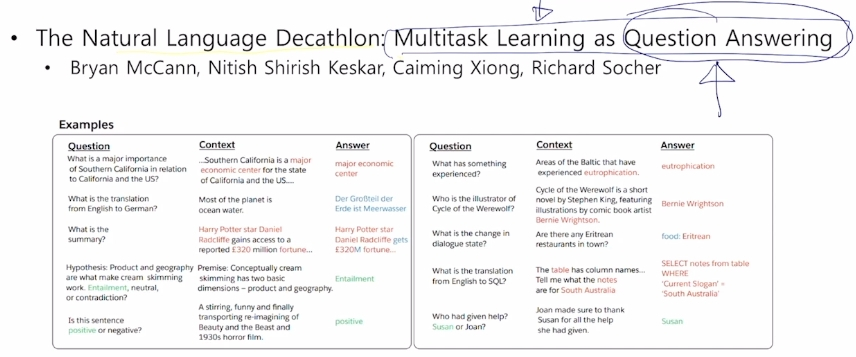
- Multitask Learning as Question Answering 에서 착안을 함
- 이 논문에서는 모든 종류의 자연어처리 task들이 QA task로 바뀔 수 있다고 주장
- 통합된 자연어 생성의 형태로 다양한 task들을 통합하여 학습한 연구 사례
GPT-2 : Datasets
- Reddit이라는 커뮤니티 웹사이트에서 답글 중 3개 이상의 좋아요를 받은 답글들을 수집함
- 링크가 존재하는 글이라면 해당 링크에 있는 텍스트 문서도 수집함
- Preprocess
- Byte pair encoding (BPE)
- WordPiece와 비슷하게 subword level에서의 단어 임베딩 사용
- Byte pair encoding (BPE)
GPT-2 : Model
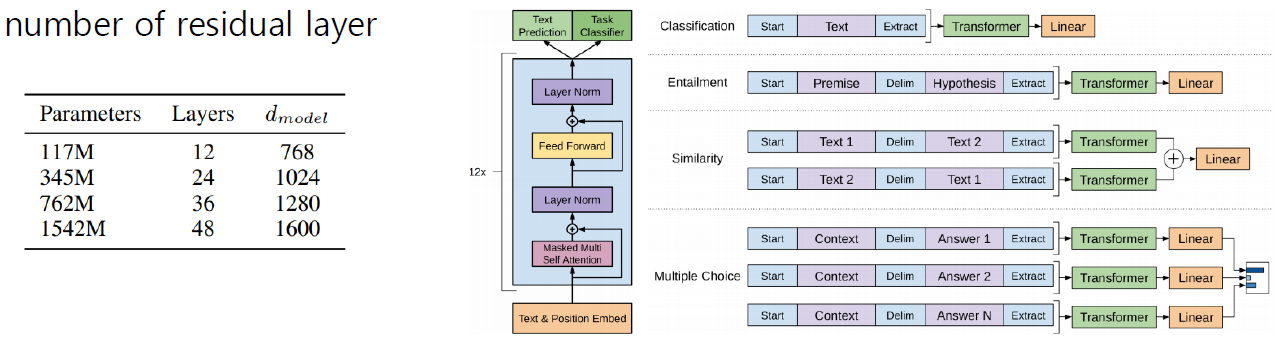
- Modification
- Layer normalization
- 각 레이어들을 random initialization할 때 레이어가 위로 갈 수록 레이어의 index에 비례 또는 반비례해서 initialization되는 값을 더 작은 값으로 만듬
- 레이어가 위쪽으로 가면 갈수록 쓰이는 여러 선형변환에 해당하는 값들이 0에 가까워지게 됨
- 위쪽에 있는 레이어가 하는 역할이 점점 더 줄어들 수 있도록 모델을 구성함
GPT-2 : Question Answering
- 자연어처리의 모든 task는 QA task로 바뀔 수 있다는 사실에 입각하여 주어지는 대화형 QA 데이터가 있을 때 대화를 주고 바로 다음에 나올 답을 예측하도록 했을 때(즉, 학습 데이터를 하나도 쓰지 않고 task에 대한 예측을 수행했을 때, zero-shot setting) fine-tuning한 후 달성한 성능에는 못 미치지만 어느 정도는 충분히 가능성을 보임
GPT-2 : Summarization

GPT-2 : Translation
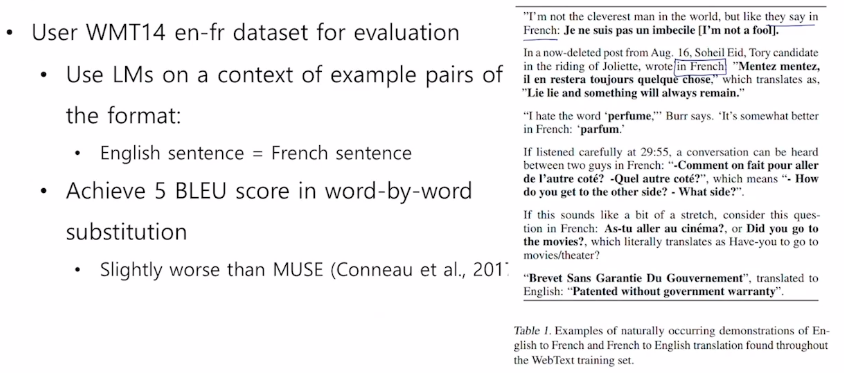
- 주어진 문장이 있으면 번역을 하고 싶은 언어로 마지막 부분에 in French처럼 붙여주면 앞서 나온 문장을 번역해줌
GPT-3 : Language Models are Few-Shot Learners
Language Models are Few-shot Learners
Scaling up language models greatly improves task-agnostic, few-shot performance
An autoregressive language model with 175 billion parameters in the few-shot setting
96 Attention layers, Batch size of 3.2M
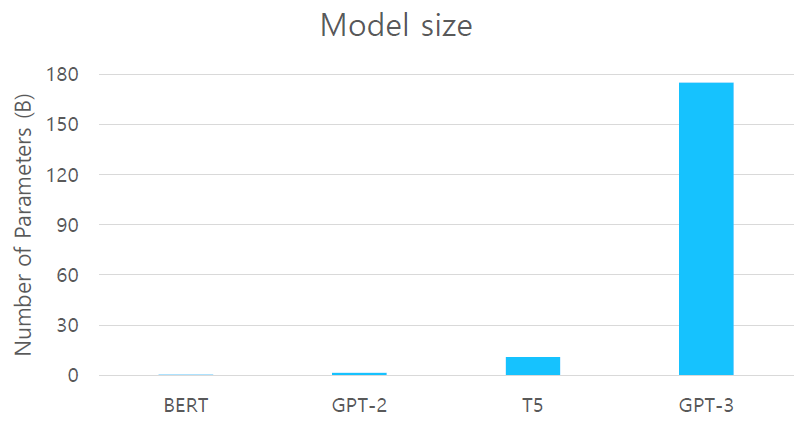
모델 구조 측면에서 특별한 점은 없음
GPT-2에 비해서 훨씬 더 많은 파라미터 수를 가지도록 트랜스포머의 self-attention block을 더 많이 쌓음
많은 데이터와 큰 배치사이즈를 통해 학습을 진행해서 성능을 향상시킴

Language Models are Few-show Learners, NeurIPS’20 Language Models are Few-show Learners, NeurIPS’20
Prompt : the prefix given to the model
Zero-shot : Predict the answer given only a natural language description of the task
One-shot : See a single example of the task in addition to the task description
- GPT-3에서는 모델 자체를 전혀 변형하지 않은 채 추론 과정 중에 예시를 입력의 일부로서 제시했을 때 단어를 주면 다음에 나타나는 결과가 zero-shot setting보다 성능이 좋아짐
Few-shot : See a few samples of the task
- one-shot setting처럼 하나가 아닌 여러 개의 예시를 줌
GPT-3는 zero-shot setting에서의 수준을 많이 끌어올림
Zero-shot performance improves steadily with model size
Few-shot performance increases more rapidly
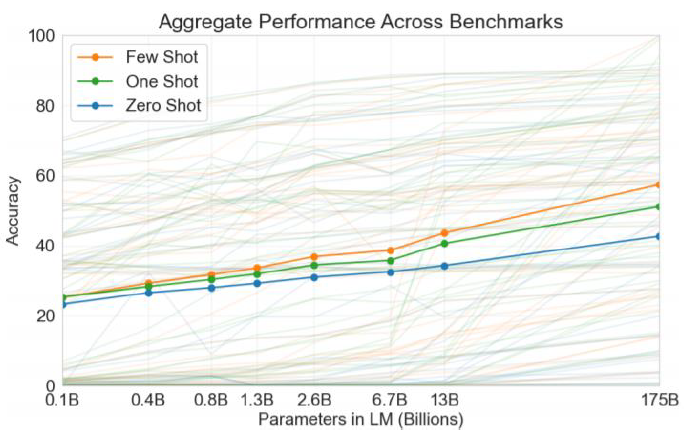
Language Models are Few-show Learners, NeurIPS’20 모델 사이즈를 키우면 키울수록 zero, one, few-shot에서의 성능이 더 빠르게 올라감
ALBERT : A Lite BERT for Self-supervised Learning of Language Representations
Is having better NLP models as easy as having larger models?
- Obstacles
- Memory Limitation
- Training Speed
- Solutions
- Factorized Embedding Parameterization
- Cross-layer Parameter Sharing
- (For Performance) Sentence Order Prediction
- pretraining 모델들은 대규모 메모리와 많은 파라미터를 가진 형태로 발전해왔기 때문에 점점 더 많은 GPU 메모리, 데이터, 학습 시간이 필요했음
- 기존 BERT 모델의 성능 하락없이 크기와 학습 시간을 줄일 수 있는 모델, 그리고 변형된 형태의 문장 레벨의 self-supervised learning의 pretrain task를 제안함
- Obstacles
Factorized Embedding Parameterization
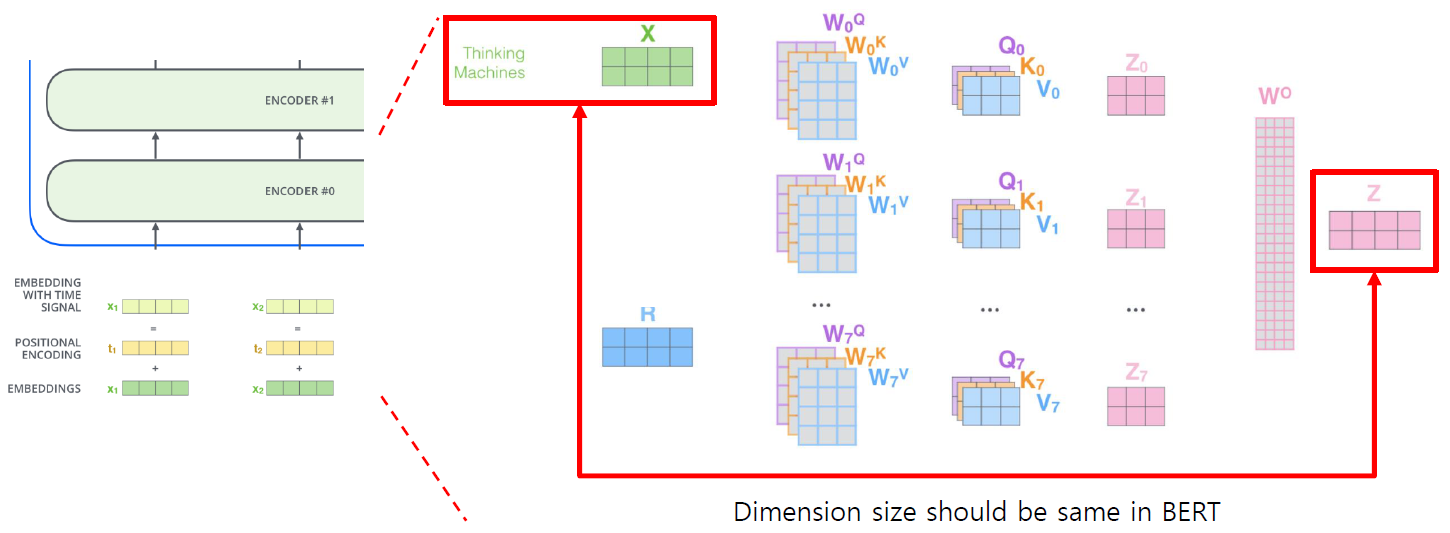
http://jalammar.github.io/illustrated transformer/ BERT에서는 임베딩 레이어와 self-attention block에서 사용되는 차원과 동일해야 함
V = Vocabulary size
H = Hidden-state dimension
E = Word embedding dimension
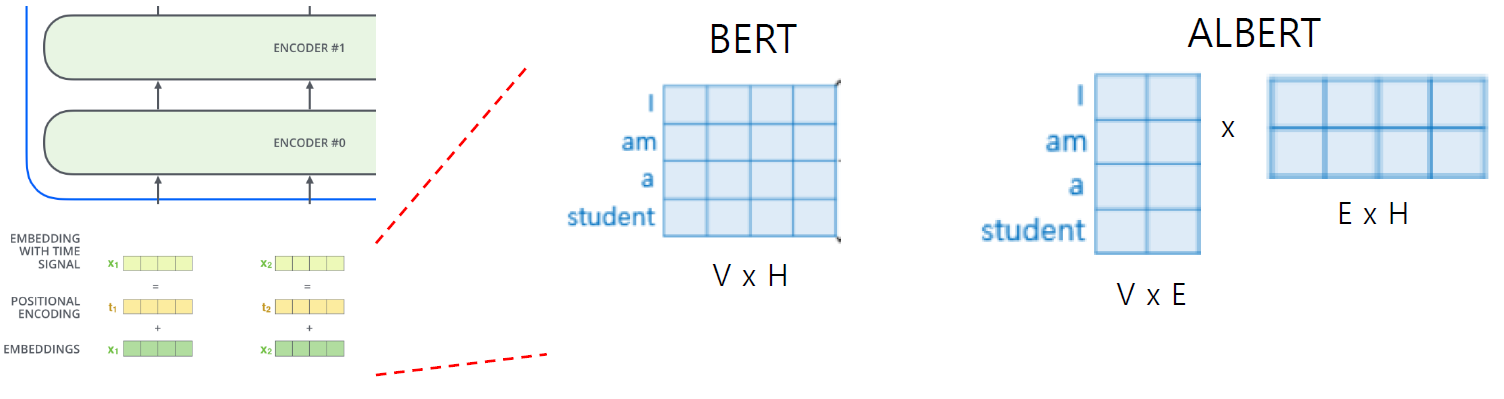
http://jalammar.github.io/illustrated transformer/ ALBERT는 임베딩 레이어의 차원을 줄이는 기법을 제시
워드 임베딩을 주기 전에 이 벡터의 차원을 줄여서 필요한 파라미터와 계산량을 줄일 수 있는 기법 제시
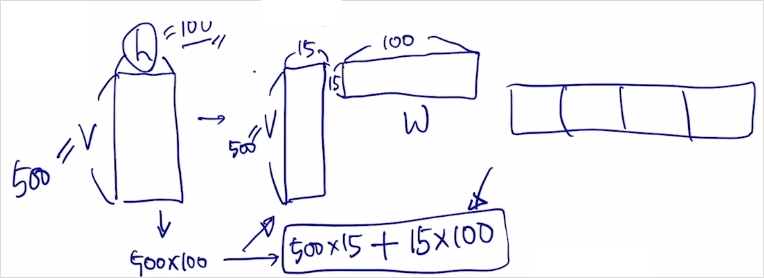
- 100차원 벡터로 주어지는 워드 임베딩 벡터를 추가적인 레이어 하나를 둬서 100차원 벡터로 차원을 다시 늘려줌
- 그럼 100차원 벡터를 동일하게 100차원으로 계산한 결과와 유사하도록 만들 수 있음
- 500x100 → 500x15 + 15x100 파라미터로 수가 줄어듬
Cross-layer Parameter Sharing
Shared-FFN : Only sharing feed-forward network parameters across layers
Shared-attention : Only sharing attention parameters across layers
All-shared : Both of them
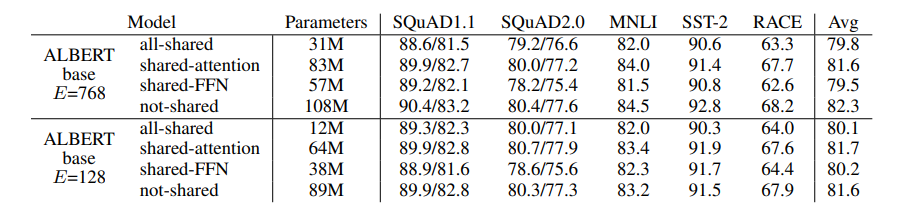
ALBERT: A Lite BERT for Self supervised Learning of Language Representations, ICLR’20 기존 BERT에서는 각 self-attention block마다 Q, K, V에 대한 파라미터가 별도로 존재했지만 ALBERT에서는 서로 다른 self-attention block에 존재하는 선형 변환 matrix들을 shared된 파라미터로 동일하게 적용하여 구성함
- 출력 레이어에 해당하는 feed-forward 네트워크 파라미터를 공유
- attention을 수행하기 위해 쓰이는 Q, K, V의 파라미터를 공유
- 1, 2를 모두 공유
- 1, 2, 3에 대한 실험 진행했을 때 3번이 파라미터 수가 가장 적고 BERT 모델에 비해 성능 하락 폭이 그렇게 크지 않음
Sentence Order Prediction
Next Sentence Prediction pretraining task in BERT is too easy
Predict the ordering of two consecutive segments of text
- Negative samples the same two consecutive segments but with their order swapped
연속적으로 등장하는 두 문장을 가져와서 그 문장의 순서가 맞는지 바뀌었는지 예측하는 binary classification task임
pretraining 과정에서 NSP(Next Sentence Prediction) task 대신 SOP(Sentence Order Prediction)을 진행
- NSP는 실효성이 별로 없다는 연구 결과가 많이 나옴

ALBERT: A Lite BERT for Self supervised Learning of Language Representations, ICLR’20 pertraining에 SOP를 적용한 결과가 더 좋음
GLUE Results
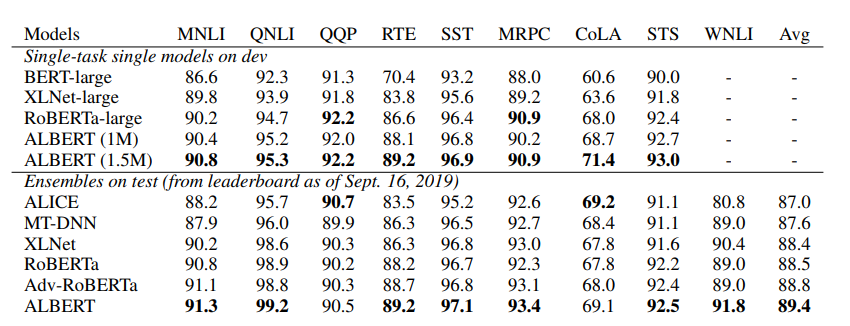
ALBERT: A Lite BERT for Self supervised Learning of Language Representations, ICLR’20
ELECTRA : Efficiently Learning an Encoder that Classifies Token Replacements Accurately
Efficiently Learning an Encoder that Clssifies Token Replacements Accurately
Learn to distinguish real input tokens from plausible but synthetically genearted replacements
Pre-training text encoders as discriminators rather than generators
Discriminator is the main networks for pre-training
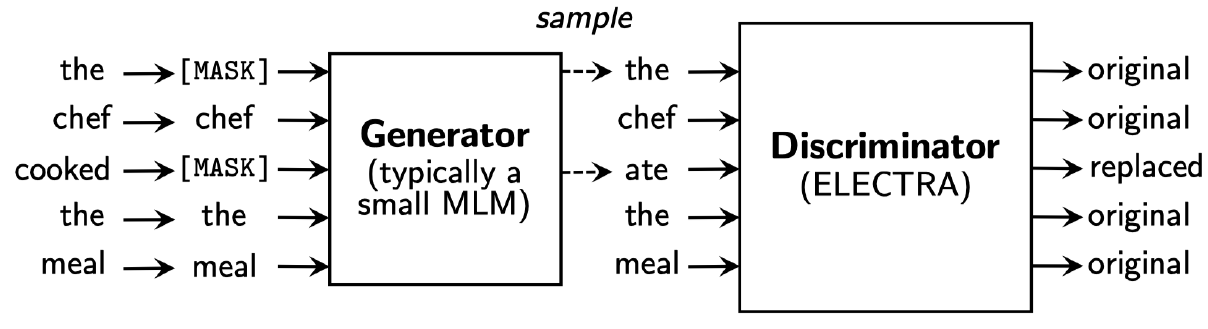
ELECTRA: Pre training Text Encoders as Discriminators Rather Than Generators, ICLR’20 mask된 단어를 복원해주는 모델(generator)를 두고 generator가 복원한 단어에 대해서 예측된 단어인지 원래부터 있었던 단어였는지 예측하는 모델(discriminator)을 두는 형태가 ELECTRA 모델의 핵심적인 특징
Generator는 BERT 모델로 생각할 수 있고 mask된 단어를 복원한 문장을 입력으로 받은 모델 구조는 기존의 BERT, GPT 모델들과 비슷하게 트랜스포머에서 제안된 self-attention block을 쌓은 구조가 됨
Discriminator는 단어별로 원래 있었던 단어인지 Generator의 예측에 의해서 대체된 단어인지 이진 분류 예측을 하게 됨
Generator와 Discriminator가 서로 적대적 관계(adversarial)로 학습됨
- GAN 모델 아이디어에서 착안
최종적으로 학습을 진행한 후에는 Discriminator 모델을 다양한 down-stream task들에 fine-tuning 하여 사용하는 pretrained 모델로 사용
Replaced token detection pre-training vs masked language model pre-training
Outperforms MLM-based methods such as BERT given the same model size, data, and compute
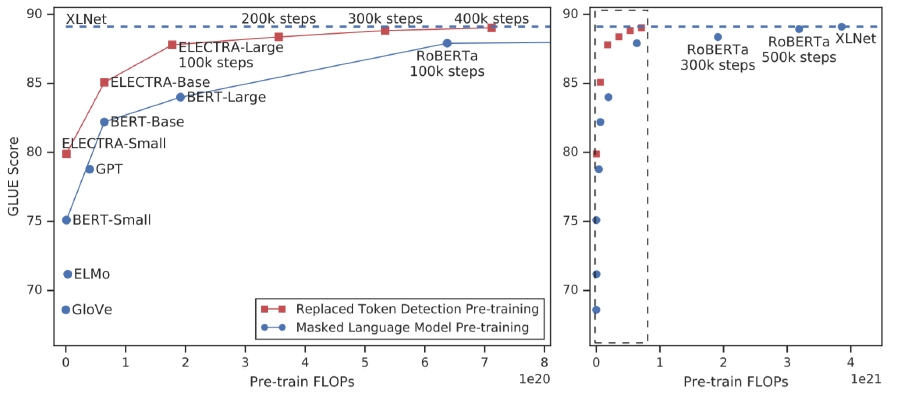
ELECTRA: Pre training Text Encoders as Discriminators Rather Than Generators, ICLR’20 ELECTRA 모델이 BERT 모델에 비해서 학습에 필요한 계산량이 같은 경우에 더 좋은 성능을 보여줌
Light-weight Models
pretrained 모델을 고도화하는 연구들이 활발하게 진행 중
그 중 한 방향으로 모델의 경량화가 있음
- 기존 모델보다 적은 레이어 수나 파라미터 수를 가지는 형태로 발전시키거나 확장시키는 연구
- 성능을 최대한 유지하면서 모델의 크기를 줄이고 계산 속도를 빠르게 하는 것이 목적
- 소형 디바이스에서 적용하기 위한 연구
DistillBERT (NeurIPS 2019 Workshop)
A triple loss, which is a distillation loss over the soft target probabilities of the teacher model leveraging the full teacher distribution
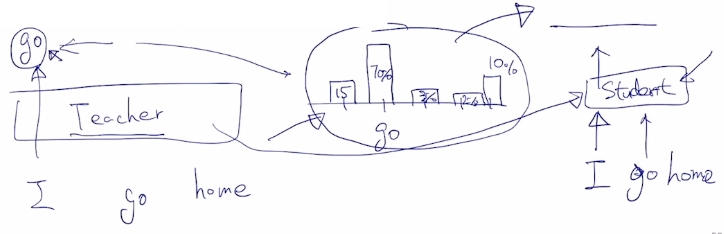
teacher 모델과 student 모델이 있음
teacher 모델은 student 모델을 가르치는 역할을 함
student 모델은 teacher 모델에 비해 레이어 수, 파라미터 수 측면에서 더 작게 경량화된 모델임
student 모델은 teacher 모델이 내는 결과를 잘 모사할 수 있도록 학습을 진행함
student 모델이 학습할 때 결과로 나오는 확률 분포에서 적용할 때 ground truth 분포로 teacher 모델이 가지는 확률 분포를 줌
그래서 student 모델이 teacher 모델이 예측한 결과를 최대한 잘 모사할 수 있도록 만들어줌
TinyBERT (Findings of EMNLP 2020)
- Two-stage learning framework, which performs Trasnformer distillation at both the pre-training and task-specific learning stages
- 여기서도 teacher 모델과 student 모델이 있음
- DistillBERT와 다르게 target 분포를 모사하여 ground truth로써 softmax loss를 적용하여 teacher 모델을 닮도록 student 모델을 학습하는 방식 뿐만 아니라 임베딩 레이어와 각 self-attention block이 가지는 Q, K, V attention matrix, 결과로 나오는 hidden state vector까지 유사해지도록 학습을 진행함
- 서로 차원이 다른 hidden state vector가 최대한 유사해지도록 loss를 적용하기 위해 더 적은 수의 벡터로 차원이 변환되는 FC 레이어를 하나 더 두고 그 부분도 학습 가능한 파라미터로 두어서 차원간의 mismatch를 해결함
- 예측값만 같아지도록 학습하는 것이 아니라 중간 결과물들도 teacher 네트워크와 최대한 유사해지도록 학습을 했다는 점이 가장 큰 특징
Fusing Knowledge Graph into Language Model
- Konwledge Graph
- 이 세상에 존재하는 다양한 개념이나 개체들을 잘 정의하고 그들간의 관계를 잘 정형화하여 만들어둔 것
- BERT는 주어진 문장에서 여러 정보들을 추출하는 것은 잘 할 수 있지만 외부 지식이 필요한 경우에는 취약하기 때문에 그러한 부분을 knowledge graph로써 잘 정의하고 BERT 등과 같은 기존의 pretraining language 모델들에 잘 결합하여 외부 지식이 필요한 task를 잘 해결할 수 있을까에 대한 연구가 진행 중임
- ERNIE : Enhanced Language Representation with Informative Entities (ACL 2019)
- Informative entities in a knowledge graph enhance language representation
- Information fusion layer takes the concatenation of the token embedding and entity embedding
- KagNET : Knowledge-Aware Graph Networks for Commonsense Reasoning (EMNLP 2019)
- A knowledge-aware reasoning framework for learning to answer commonsense questions
- For each pair of question and answer candidate, it retrieves a sub-graph from an external knowledge graph to capture relevant knowledge
출처: 부스트캠프 AI Tech 4기(NAVER Connect Foundation)
'부스트캠프 AI Tech 4기' 카테고리의 다른 글
| (NLP 기초대회) PyTorch Lightning 이론 (2) | 2023.07.15 |
|---|---|
| (Data Viz) 인터랙티브 시각화 (0) | 2023.07.13 |
| (NLP) Self-supervised Pre-training Models (0) | 2023.07.11 |
| Git (1) | 2023.07.06 |
| (NLP) Transformer - 2 (0) | 2023.07.05 |

